

.jpg)
How to Build a Flight Case – Step-by-Step Guide
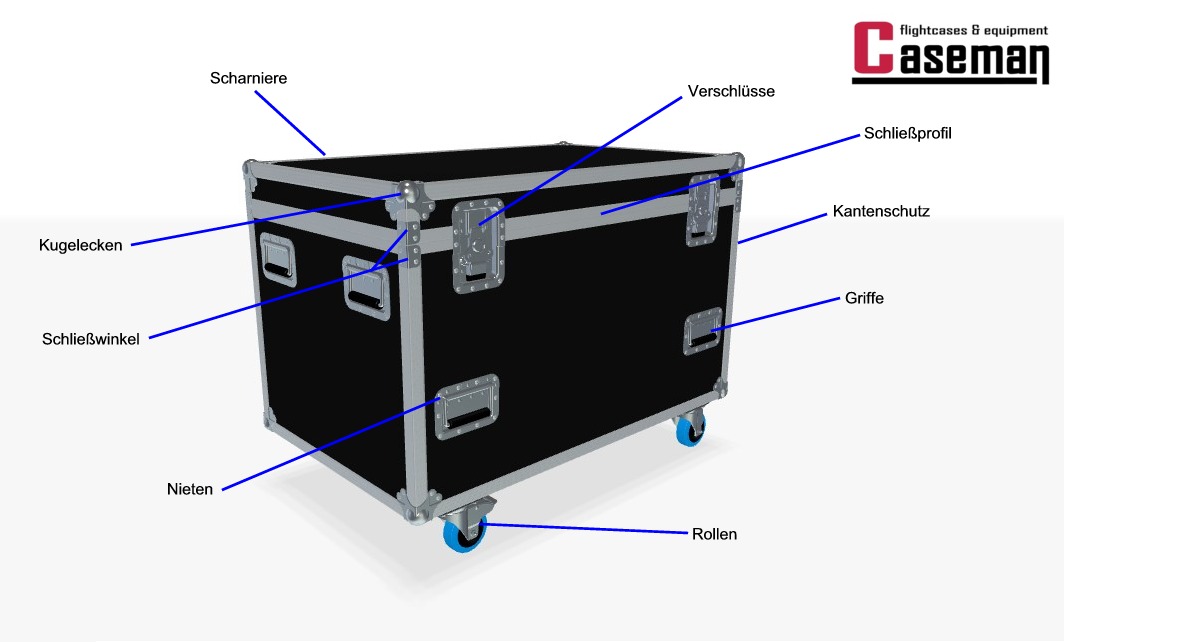
A flight case consists of durable panels, aluminium extrusions and specialised case hardware. A typical flight case requires case edging and lid location extrusions, ball corners, butterfly latches, handles, hinges and rivets. Larger cases can also be fitted with castors, while foam protects sensitive equipment inside the case.
What do you need to build a flight case?
The components required depend on the size, weight and intended use of the case. A typical professional transport case is usually built using the following components:
| Component | Purpose in a flight case |
|---|---|
| Panel material | Forms the sides, base and lid of the case. |
| Case edging | Protects and reinforces the outer panel edges. |
| Lid location extrusions | Create a strong and accurate connection between the lid and the lower section of the case. |
| Ball corners | Protect the corners of the flight case from impact and wear. |
| Butterfly latches | Securely close the case for storage and transport. |
| Handles | Allow the case to be carried and handled safely. |
| Hinges | Connect moving parts such as the case body and lid. |
| Rivets | Permanently attach extrusions and hardware to the case. |
| Castors | Make larger and heavier flight cases easier to move. |
| Foam | Cushions and protects sensitive equipment inside the case. |
Key flight case components in our shop:
How to build a flight case – step by step
1. Plan the flight case and determine the dimensions
Start by determining the external and internal dimensions of the flight case. Consider the dimensions of the equipment as well as sufficient space for padding, foam and hardware. For heavy equipment, also consider how the loaded case will be carried and moved.
2. Cut the panels
The panels form the basic structure of the flight case and should be cut as accurately as possible. Precise dimensions make it easier to install the aluminium extrusions and help ensure that the sides, base and lid fit together correctly.
3. Install the aluminium extrusions
Aluminium extrusions protect the panel edges and increase the stability of the case. Case edging is fitted to the outer edges, while lid location extrusions form the connection between the lid and the lower section of the flight case.
You can find suitable aluminium extrusions for flight case construction in our range.
4. Install corners, latches, hinges and handles
Ball corners protect the exposed outer corners of the case. Butterfly latches keep the flight case securely closed during transport. Hinges connect the lid and case body when the lid is not designed to be completely removable. Handles should be positioned according to the size and weight of the loaded case.
When choosing flight case latches and flight case handles, consider the size, load and construction of the case.
5. Install the castors
Castors make larger or heavier flight cases considerably easier to transport. Heavy-duty swivel castors allow the case to be manoeuvred easily, while braked castors help keep it securely in position when stationary.
The required load capacity should always be suitable for the total weight of the fully loaded case. You can find suitable flight case castors and wheels in our range.
6. Fit the interior and foam
Sensitive equipment should not rest directly against the case panels without protection. Depending on the application, soft cushioning foam, rigid foam or individually cut foam inserts can be used. The padding protects equipment against impacts and helps prevent unwanted movement inside the case.
Our foam and carpet products for flight cases include materials for a variety of case-building applications.
Which aluminium extrusions do you need for a flight case?
Case edging and lid location extrusions are commonly used in flight case construction. Case edging reinforces and protects the outer panel edges. Lid location extrusions are fitted to the edges of the lid and lower case section to create a strong and accurate closing edge.
Which latches are suitable for flight cases?
Butterfly latches are one of the most common closing systems used in professional flight case construction. They are available in different sizes and designs. The appropriate latch depends on factors such as case size, construction and expected load.
Which castors are suitable for flight cases?
Heavy-duty swivel castors are commonly used for professional transport cases. Braked castors are useful when the case needs to remain securely in position. The number and load capacity of the castors should always be suitable for the total weight of the loaded flight case.
Does a flight case need foam?
Foam is not essential for every flight case, but it is often recommended for sensitive equipment. It cushions equipment against impacts, reduces movement during transport and can be adapted to the shape of the equipment being protected.
Tips for building a durable flight case
- Cut and assemble panels and extrusions as accurately as possible.
- Select hardware according to the size and weight of the case.
- Position handles so that the loaded case can be carried safely.
- Use castors with sufficient load capacity for heavy cases.
- Protect sensitive equipment with suitable interior padding.
- Use professional flight case components for cases exposed to frequent or demanding use.
Which flight case parts do you need?
The exact components depend on the design and intended use of the case. For a detailed explanation of the individual parts, see our guide Flight Case Parts Explained – Overview of Essential Components.
Flight case hardware for your own case build
At Caseman you can find flight case hardware and case building materials for building, repairing and modifying custom flight cases. The range includes aluminium extrusions, latches, handles, castors, corners, hinges and other professional case hardware.